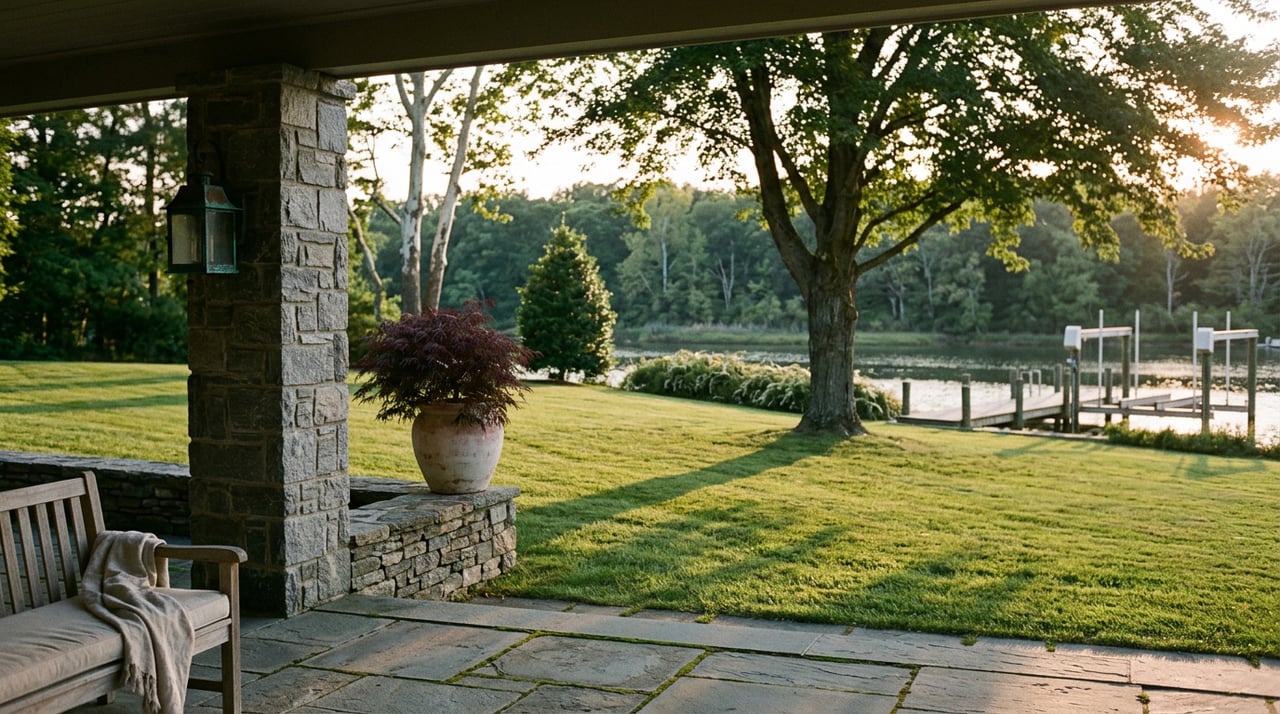
The Dock Isn't Included: What Waterfront Buyers in Mooresville Need to Verify Before They Close
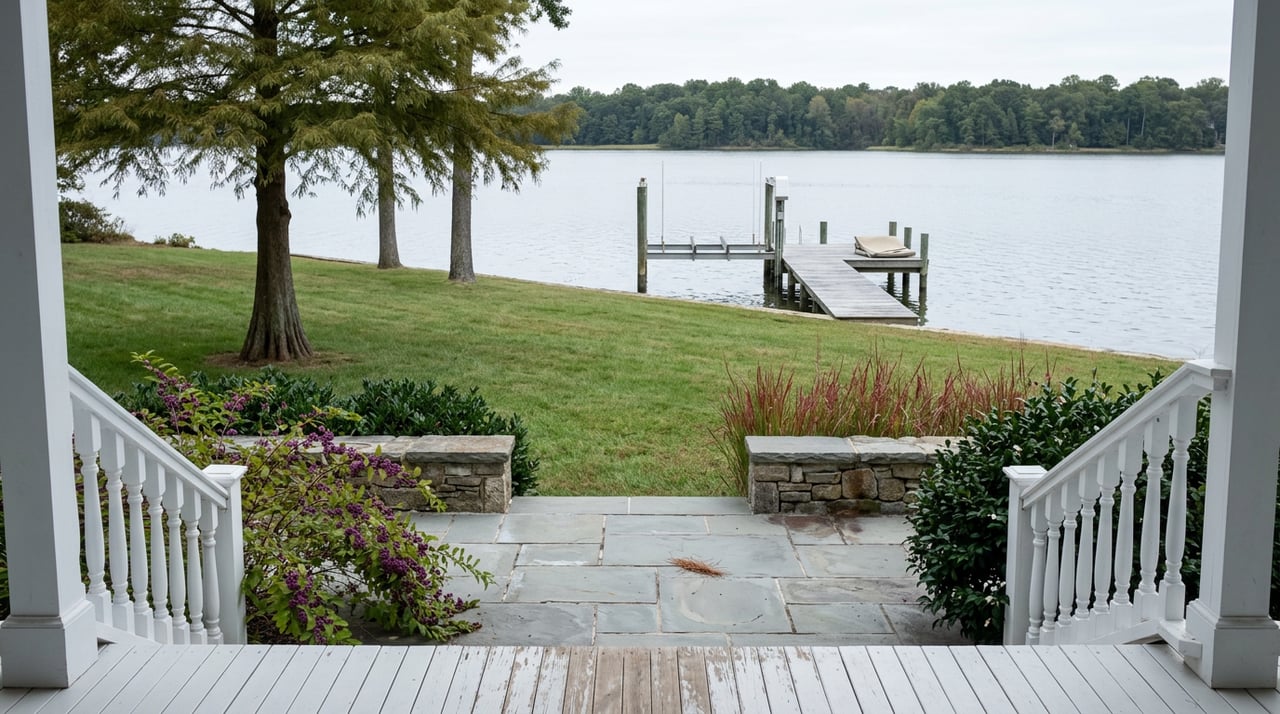
What do you actually own when you close on a home with a private dock on Lake Norman? Not the dock itself, and not the water under it. Duke Energy controls the lakebed and shoreline down to what the utility calls full pond, and every dock, boat lift, or seawall sitting at or below that line exists because Duke issued a permit for it, not because it came with the deed. For a buyer in Mooresville looking at homes on The Point, Harbour at the Pointe, or the Brawley School Road peninsula, that distinction is not a technicality. It is the single most common source of a delayed or derailed closing on lake property.
Lake Norman is a Duke Energy reservoir, built and operated under a license from the Federal Energy Regulatory Commission. That license gives Duke authority over everything at or below the 760-foot full-pond elevation, the line that marks the water's surface when the lake is completely full. A dock at that elevation is not yours simply because it was there when you toured the house. Its legal standing depends on a Duke Energy permit, issued through the utility's online Lake Access Permit System, and on whether the terms of that permit have actually been kept up.
That is one layer of oversight. The other belongs to the Lake Norman Marine Commission, the body responsible for reviewing variance requests and site plans, maintaining navigational aids, and running water safety programs on the lake. Unlike Duke, the Marine Commission is a public authority created by state statute in 1969, funded jointly by Catawba, Iredell, Lincoln, and Mecklenburg counties. In May 2025, Lincoln County's Board of Commissioners voted to withdraw from that arrangement, and because state law dissolves the commission the moment any member county leaves, the Marine Commission itself ceased to exist as previously structured on June 30, 2025.
What comes next matters to anyone buying on a Mooresville peninsula right now.
Legislation introduced to recodify the commission proposed a nine-member panel, two seats each for Lincoln, Mecklenburg, Iredell, and Catawba counties plus one at-large member, along with a rewritten definition of shoreline area that would remove peninsulas extending into the lake from the commission's own jurisdiction.
None of that touches Duke's permitting authority. Duke's jurisdiction still runs to the 760-foot line everywhere on the lake, peninsula or not. The legislation targets only the Marine Commission's own definition of shoreline area, the boundary that determines which properties fall under its variance requests and site plan reviews. By June 2026, the reconstituted commission was functioning well enough to hold a public hearing on its fiscal year 2026-27 budget, a sign that some version of the new structure is now operating. The precise membership and boundary details are worth confirming directly with the commission rather than assuming, since the buyer-facing consequences depend on exactly how that redefinition lands.
A standard private dock review through Duke's Lake Access Permit System typically takes four to twelve weeks, longer if the project touches dredging, shoreline fill, or wetlands. That is the honest timeline for a straightforward repair or minor addition. It is not a timeline that fits neatly inside a 30-day due diligence period, and it is nowhere close to how fast the Mooresville waterfront segment is currently moving.
| What you're measuring | Time window |
|---|---|
| Standard Duke Energy dock permit review | 4 to 12 weeks |
| Permit transfer into a new owner's name (if not already done) | Additional weeks on top of review |
| Projects involving dredging, fill, or wetland impact | Materially longer than standard review |
| Median days on market, Lake Norman of Iredell luxury submarket | 34 days, as of March 2026 |
| Median days on market, Mooresville overall | 53 days, as of April 2026 |
A buyer who waits until after closing to start verifying the dock is treating a multi-week regulatory process as an afterthought in a market where the underlying property itself is likely to be under contract before the permit review would even finish. That mismatch is the actual risk, more than any single line item in the permit file.
Duke's own rules add a wrinkle here. Only the named permit holder can request the official permit record, though Duke will release it to a listing agent the seller has authorized. If the current owner never transferred the permit into their own name after their purchase, someone has to complete that transfer before a clean record even exists to hand over, and that step takes time most buyers don't budget for.
Before writing an offer contingent on anything less than full verification, ask the seller or listing agent for:
An undocumented dock is not automatically a dealbreaker, but it is a due diligence item, not a post-closing problem. The new owner inherits whatever compliance gap exists the moment the deed transfers.
Mooresville's most sought-after waterfront sits on narrow points of land jutting into the lake, exactly the geography the pending legislation would carve out of the Marine Commission's own shoreline area definition. The Point, anchored by the private, Greg Norman-designed course at Trump National Charlotte, sits on the Brawley School Road peninsula. Nearby enclaves like Harbour at the Pointe, Commodore Peninsula, and LakeWalk share the same shoreline geometry, with Sisters Cove representing the newer wave of luxury lakefront development along a similar stretch of shoreline. The public Hager Creek Access Area, just off Brawley School Road, sits close enough to serve as a shorthand for how tightly packed this peninsula really is.
None of that changes what Duke requires for a dock permit. It does mean that a buyer closing on a peninsula lot should ask a second, more specific question beyond the standard Duke verification: does this parcel fall under the Marine Commission's shoreline area definition today, given the pending redefinition that would remove peninsulas from that boundary, and if not, who holds that authority in the meantime. It is a fair question to put to a listing agent or a title company directly, and it is one most generic dock guides never raise because the restructuring postdates them.
Third-quarter 2025 market reporting for the Lake Norman area showed Mooresville's $1M to $2M closings climbing to 58 for the quarter, compared with 11 during the same quarter of 2024, alongside a record $11 million sale elsewhere on the lake that underscored how resilient the ultra-luxury tier had been even as the broader market cooled. That demand has not slowed. As of March 2026, the Lake Norman of Iredell luxury submarket carried a median listing price above $1.7 million and a median time on market of just 34 days, faster than Mooresville's overall 53-day median in April 2026 and faster still than Iredell County's countywide 55-day median that same month.
Waterfront homes in this price range are not sitting long enough to absorb a permit surprise mid-transaction. The practical read is straightforward: start verifying the dock the same week you write the offer, not the week after you close.
Does every dock on Lake Norman need a Duke Energy permit? Yes. Any permanent structure at or below the 760-foot full-pond line, including docks, lifts, and seawalls, requires Duke's authorization regardless of which county or HOA the property sits in.
Can I close first and sort out the dock permit afterward? You can, but you inherit whatever compliance gap exists the moment you own the property. If the permit was never transferred into the seller's name, or the dock has been modified without updated approval, that becomes your problem to resolve, on your timeline, at your cost.
Does the Marine Commission's 2025-2026 restructuring change Duke's permit process? No. Duke's FERC-based authority over the 760-foot line is separate from the Marine Commission and is not altered by the pending statute change. What the legislation targets is which shoreline the Marine Commission itself considers within its own jurisdiction for variance requests, site plans, and navigational matters, a distinction that matters most for peninsula properties like those in and around The Point.
Waterfront transactions on Lake Norman reward buyers who front-load the paperwork instead of trusting the listing photos. If you're weighing a home on one of Mooresville's peninsulas or anywhere else on the lake and want a clear-eyed read on what a specific dock's permit history actually shows, Mary Kay Portaro has spent nearly two decades on this water and knows exactly which questions to ask before you're locked into a contract. Let's Connect.


Every real estate journey deserves trusted guidance, clear communication, and a personalized approach. Backed by strong negotiation skills, strategic marketing expertise, and deep local market knowledge, every client receives dedicated support from start to finish. The goal is to make your buying or selling experience seamless, rewarding, and stress-free.
ADDRESS 21025 Catawba Ave #101 Cornelius, NC 28031