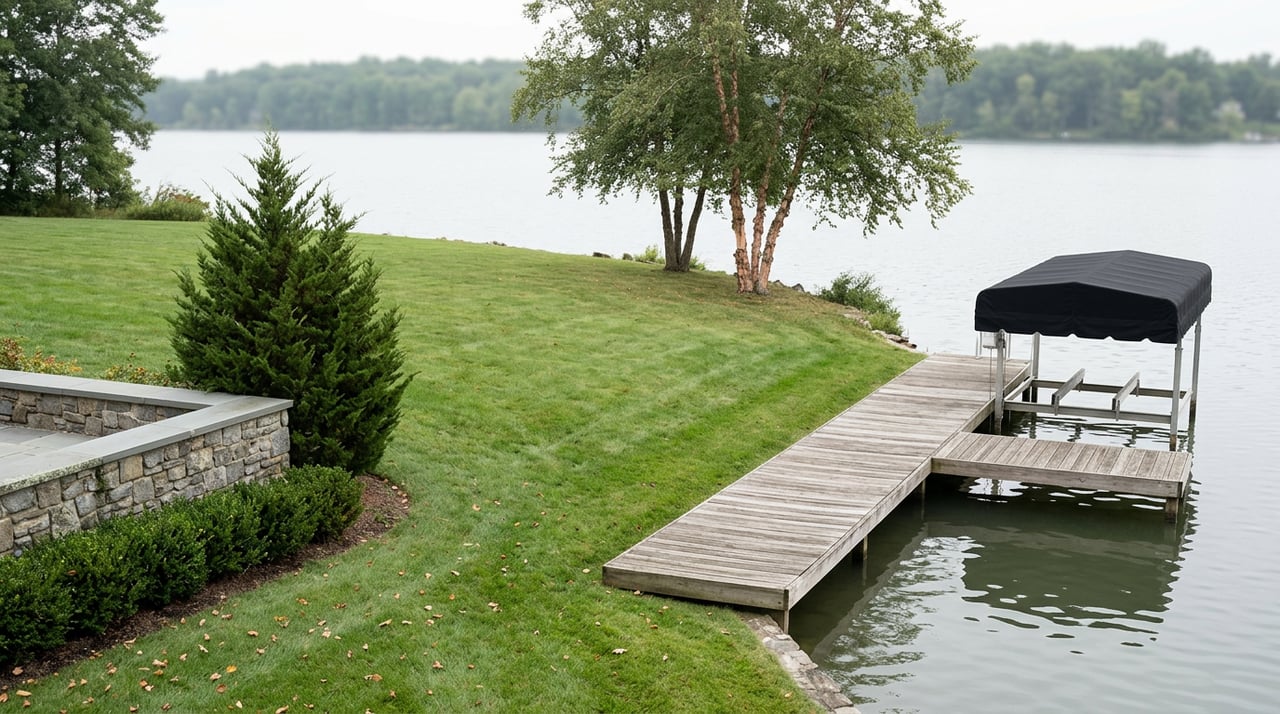
In Cornelius, the Utility Company Decides What Your Dock Is Worth This Year
"If you think 50 yards is safe, double it. Make it 100 yards." That was the advice Keegan Higgins, owner of 77 Watersports, gave renters heading onto Lake Norman last spring, when submerged stumps and rocks that are normally covered by six feet of water were suddenly close enough to clip a prop. He wasn't talking about a bad week. He was describing a lake that had dropped three feet below where it stood a year earlier, with boat ramps closing because there wasn't enough water left to launch into.
If you're shopping for a waterfront home in Cornelius right now, that spring matters more than it looks like it should. A listing's price reflects square footage, shoreline length, dock size, and boat lift capacity. It does not reflect whether that dock will actually float your boat in any given month, because that decision was never the seller's to make. It belongs to a regional coordinating group most Cornelius homeowners have never heard of, and 2026 was the year that group's decisions became impossible to miss, right down to a beach in your own town that stayed closed for the entire summer.
The numbers from this year aren't a rounding error. The Charlotte region logged its driest six-month stretch since 1971, according to Duke Energy officials, and by April four local counties, including Mecklenburg, had been pushed into "exceptional" D4 drought for the first time since 2008. Lake Norman felt it directly. Duke Energy's own lake data shows the reservoir has averaged around 98 feet in a typical May over the past five years. This May, it stood at 94 feet, a four-foot gap that doesn't sound like much until you remember that shallow coves and back inlets lose depth fastest and least visibly.
The closures tell the rest of the story. Several boat ramps at Blythe Landing shut down entirely. And in Cornelius itself, Ramsey Creek Beach, the only public swimming beach serving Cornelius, Davidson, and Huntersville, was closed by Mecklenburg County for the entire summer of 2026 due to drought and low water. That's not a headline that traveled far outside the area, but if you live near Jetton Road or any of the coves feeding into that stretch of shoreline, you watched it happen from your own dock.
| Reference point | Elevation | What it tells you |
|---|---|---|
| Full pond | 100 feet | Maximum capacity before spillover at the dam |
| Typical target range | 95 to 98 feet | Where Duke Energy aims to hold the lake in normal years |
| Lake Norman, May 2026 | 94 feet | Below target, during an active drought declaration |
| Five-year May average | ~98 feet | The "normal" a listing photo probably assumes |
Duke Energy doesn't manage Lake Norman on its own, and it isn't managing it primarily for boats. The lake is one link in the Catawba-Wateree River Basin, a chain that supplies drinking water to more than two million people across 24 counties in the Carolinas. Decisions about how much water stays in the lake go through the Catawba-Wateree Drought Management Advisory Group, a coalition of cities and industries, Duke Energy among them, that coordinates shared guidance for the entire basin. On May 1, 2026, that group declared Stage 2 of its Low Inflow Protocol, the first Stage 2 declaration since 2009, a 17-year gap.
Duke Energy spokesperson Logan Stewart put the priority order plainly during the drought: "when we're in a drought, nothing is more important than drinking water." Recreational flows, the releases boaters, kayakers, and dock owners depend on, get slowed as a matter of policy so drinking water keeps flowing to Charlotte and its neighbors. That's the mechanism worth sitting with. A Cornelius dock's usability in any given season is a downstream effect of a drinking-water plan, not a real estate variable, and no amount of staging, pricing strategy, or curb appeal changes that.
As of mid-September 2026, the Catawba chain's storage remains at roughly 78 percent of seasonal target, still recovering from the spring low. That's useful context for anyone touring waterfront homes right now, because it means the lake you're looking at today is closer to a stress-tested version of itself than a full-pond showpiece.
A few things worth checking before you fall for a dock:
None of this means Cornelius waterfront is a worse buy than it was a year ago. It means the price you're comparing across listings should be weighed against how each property performs when the lake isn't cooperating, not just how it photographs on a good July afternoon.
Is the drought still affecting Lake Norman right now? Regional storage was still running below full seasonal target as of mid-September 2026, though levels have climbed back from the spring low. Check Duke Energy's lake levels page for the current reading before you write an offer.
Does a dry year change what a waterfront home is worth? Not on its own. It changes what you should verify. A home's price reflects the property; it doesn't reflect whether the dock cleared the water this particular season.
Will 2026 happen again next year? Nobody can promise that, and this piece isn't the place to guess. What's clear is that the lake's level answers to a drinking-water plan for two million people first, which is exactly why buyers should evaluate docks against target and low-pond conditions, not just the day they happen to tour.
Buying on Lake Norman means buying a relationship with a lake that isn't entirely yours to manage. That's not a reason to walk away from a Cornelius waterfront home. It's a reason to look at the dock the way you'd look at anything else that depends on conditions outside your control: with a clear sense of its worst case, not just its best photo.
If you're comparing waterfront listings in Cornelius and want a second set of eyes on what a dock will actually do in a dry year, Mary Kay Portaro has spent nearly two decades on this lake and knows which coves hold up and which ones need a closer look. Let's Connect.
Every real estate journey deserves trusted guidance, clear communication, and a personalized approach. Backed by strong negotiation skills, strategic marketing expertise, and deep local market knowledge, every client receives dedicated support from start to finish. The goal is to make your buying or selling experience seamless, rewarding, and stress-free.
ADDRESS 21025 Catawba Ave #101 Cornelius, NC 28031